
36H: A Novel Potent Inhibitor For Antimelanogenesis Part 2
Mar 31, 2023
4. Discussion
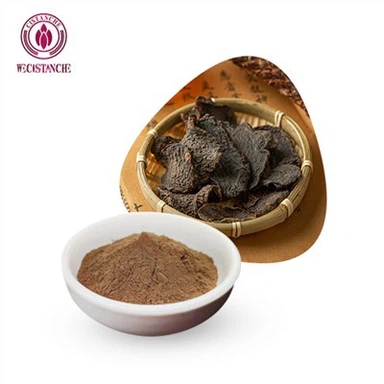
According to relevant studies,cistanche is a common herb that is known as "the miracle herb that prolongs life". Its main component is cistanoside, which has various effects such as antioxidant, anti-inflammatory, and immune function promotion. The mechanism between cistanche and skin whitening lies in the antioxidant effect of cistanche glycosides. Melanin in human skin is produced by the oxidation of tyrosine catalyzed by tyrosinase, and the oxidation reaction requires the participation of oxygen, so the oxygen-free radicals in the body become an important factor affecting melanin production. Cistanche contains cistanoside, which is an antioxidant and can reduce the generation of free radicals in the body, thus inhibiting melanin production.

Click on Cistanche to Scavenge Tyrosinase
Ask for more:
david.deng@wecistanche.com WhatApp:86 13632399501
This study shows that antioxidants inhibit melanogenesis in two ways. In the melanin biosynthesis process [15], tyrosinase first transforms hydroxide tyrosine to DOPA, then oxidizes DOPA to dopaquinone [2]. Melanin scavenges free radicals to inhibit lipid peroxidation and protects the skin from UV damage, but melanin can also be deoxidized by an antioxidant. Therefore, melanin is called the radical sink [2, 16, 17]. A lack of melanin reduces the protection of the skin, so ROS stimulates melanocytes to produce more melanin [18]. Consequently, a good antioxidant can reduce tyrosinase activity and inhibit parts of melanin synthesis. 36H had antioxidant properties in the DPPH free radical-scavenging ability and ferric-reducing power.

Cistanche has the function of promoting collagen production, which can increase the elasticity and luster of the skin and help repair damaged skin cells. Cistanche Phenylethanol Glycosides have a significant down-regulating effect on tyrosinase activity, and the effect on tyrosinase is shown to be competitive and reversible inhibition, which can provide a scientific basis for developing and utilizing the whitening ingredients in Cistanche. Therefore, cistanche has a key role in skin whitening. It can inhibit melanin production to reduce discoloration and dullness; and promote collagen production to improve skin elasticity and radiance. Due to the widespread recognition of these effects of cistanche, many skin whitening products have begun to infuse herbal ingredients such as Cistanche to meet consumer demand, thus increasing the commercial value of Cistanche in skin whitening products. In summary, the role of cistanche in skin whitening is crucial. Its antioxidant effect and collagen-producing effect can reduce discoloration and dullness, improve skin elasticity and luster, and thus achieve a whitening effect. Also, the wide application of Cistanche in skin whitening products demonstrates that its role in commercial value cannot be underestimated.

Before injecting the protein samples into SDS-PAGE, we normalized all protein levels. Protein normalization is a signifificant process applied to remove both experimental biological errors and artificial unexpected variabilities [2]. Genes encoded in DNA are transcribed into pre-messenger RNA (mRNA) by RNA polymerase, and then most organisms develop it using various posttranscriptional modification forms to generate the matured mRNA, which is applied as a template for protein synthesis via ribosomes. The transcription unit is a stretched DNA to transcribe into RNA and transcripts mRNA which is provided as a template for the protein translation for the syntheses [3, 6]. In human beings, mRNA is in the cellular nucleus to be translocated across the nuclear membrane into the cytoplasm, which is the location where protein syntheses take place. The relationship between mRNA and protein is a complex network. The regulation of NDA transcriptions and translations could be differently changed. In cells, proteases degrade the functions of proteins into small amino acids or polypeptides. Due to intracellular breakdown, amino acids can be recycled for protein synthesis again. This mechanism cleans abnormal or damaged proteins and ones that are no longer needed to prevent unnecessary protein accumulations. Although we would consider that the number of proteins decreased when the transcription of the encoding genes was reduced, there were other mechanisms regulating the protein abundance. For example, the protein’s half-life might be increased due to a decreased rate of biodegradation. Another possibility was that the mRNA was more preferentially translated during the process. The human skin color is also affected by the melanosome regulative degradation autophagy in keratinocytes [19].


When keratinocytes are exposed to UV [20], they release α-melanocyte-stimulating hormone (α-MSH), adrenocorticotropic hormone (ACTH), and prostaglandins E2 (PGE2) [21]. These signaling molecules activate the downstream signaling pathway of adenylate cyclase through the melanocortin 1 receptor (Mc1R) on the membrane of the melanocyte to induce melanogenesis by enhancing MITF, tyrosinase, TRP-1, and TRP-2 [22] and through the IP3/DAG mechanism to activate the inactive-form tyrosinase to the active form. Our work demonstrated that 36H altered MITF RNA expression, but there was an insignificant change in the amount of protein production. Tyrosinase affects melanin biosynthesis and TRP-2 and TRP-1 [23]. Dopachrome is catalyzed to 5,6-dihydroxy indole-2carboxylic acid by TRP- 2, and 5,6-dihydroxy indole-2carboxylic acid is transferred to indole-5,6-quinone carboxylic acid via TRP-1 [24], which is then synthesized into eumelanin [16]. In mushroom tyrosinase and cellular tyrosinase assays, 36H downregulated tyrosinase activity. TRP-2 and TRP-1 were diminished at the RNA level, but there were insignificant differences in protein levels, compared to the control group. In melanosome maturation, Pmel17 is the precursor of melanosome. It is proteolyzed into fragments to form the striated pattern that underlies melanosomal ultrastructure [25]. Using a western blot, Pmel17 was shown to decrease in both RNA and protein expressions, which interrupted the maturation of melanosomes.

Human skin melanin is driven by the intercellular movement of melanin-containing melanosomes from the extremities of HMC dendrites to neighboring keratinocytes. When it is carried by the actin filament, melanosome moves to the dendritic tail section, through exocytosis, and is transported into keratinocytes [26]. The greater the amount of melanin that is transferred into keratinocytes, the darker the color of the skin [27]. The movement of the microtubule depends on the dynein-dynactin motor complex. Mreg forms a complex with Rab-interacting lysosomal protein and p150(Glued) which is a subunit of dynactin [28]. Mreg adjusts a shedding system that transports melanosomes from HMC to keratinocytes. The shedding process from the HMC of melanosome-rich packages undergoes the phagocytosis of keratinocytes. The shedding not only takes place principally at dendritic extremities but also around the center areas, having adhesion to keratinocytes, tightening behind the forming packages, and apparent self-abscissions [29]. The movement on the actin filament requires Myo5a, Rab27a, and MLPH as the connecting bridge [30]. 36H downregulated the protein expression for Myo5a and might prevent a darkening of skin color. Collectively, the data show that 36H is an effective skin-whitening agent that has the potential for cosmetic applications (Figure 7).

Conflicts of Interest
The authors have no competing interests regarding the publication of this study.
Authors’ Contributions
Li-Ching Lin, Byeong Hee Hwang, Yueh-Hsiung Kuo, and Hui-Min David Wang conceived and designed the experiments; Li-Ching Lin, Chung-Yi Chen, Chia-Hung Kuo, and Yun-Sheng Lin performed the experiments and analyzed the data; Yueh-Hsiung Kuo contributed the reagents, materials, and analysis tools; Li-Ching Lin, Chung-Yi Chen, Tina Kaiting Wang, and Hui-Min David Wang wrote the paper. Li-Ching Lin and Chung-Yi Chen contributed equally to this work.

Acknowledgments
The authors would like to thank Pei-Lun Liao for the experimental assistance. This work was supported by grants from the Ministry of Science and Technology, Taiwan (MOST 104-2622-E-037-001, MOST104-2622-E-037-003- CC2, MOST104-2221-E-037-005-MY2, and MOST104- 2628-E-037-001-MY3). The authors are also thankful for the projects of the Center for Stem Cell Research, Kaohsiung Medical University, Kaohsiung, Taiwan (KMU-TP104G00, KMU-TP104G01, and KMU-TP104G02-05).
References
[1] K. C. Chon, C. Y. Wu, J. Y. Chen et al., “BubR1 acts as a promoter in cellular motility of human oral squamous cancer cells through regulating MMP-2 and MMP-9,” International Journal of Molecular Sciences, vol. 16, no. 7, pp. 15104– 15117, 2015.
[2] H. M. Wang, C. Y. Chen, and Z. H. Wen, “Identifying melanogenesis inhibitors from Cinnamomum subavenium with in vitro and in vivo screening systems by targeting the human tyrosinase,” Experimental Dermatology, vol. 20, no. 3, pp. 242– 248, 2011.
[3] H. M. Wang, C. Y. Chen, and P. F. Wu, “Isophilippinolide a arrests cell cycle progression and induces apoptosis for anticancer inhibitory agents in human melanoma cells,” Journal of Agricultural and Food Chemistry, vol. 62, no. 5, pp. 1057–1065, 2014.
[4] N. P. Edwards, “Elemental characterization of melanin in feathers via synchrotron X-ray imaging and absorption spectroscopy,” Scientific Reports, vol. 6, no. 1, 2016.
[5] H. M. Wang, “Bioconstituents from stems of Synsepalum Dulcifificum Daniell (Sapotaceae) inhibit human melanoma proliferation, reduce mushroom tyrosinase activity and have antioxidant properties,” Journal of the Taiwan Institute of Chemical Engineers, vol. 42, no. 2, pp. 204–211, 2011.
[6] B. H. Chen, H. W. Chang, H. M. Wang, et al., “(−)-Anonaine induces DNA damage and inhibits growth and migration of human lung carcinoma H1299 cells,” Journal of Agricultural and Food Chemistry, vol. 59, no. 6, pp. 2284–2290, 2011.
[7] Y. C. Chou, J. R. Sheu, C. L. Chung, et al., “Nuclear-targeted inhibition of NF-κB on MMP-9 production by N-2-(4-bromophenyl) ethyl caffeine in human monocytic cells,” Chemico-Biological Interactions, vol. 184, no. 3, pp. 403–412, 2010.
[8] W. J. Li, Y. C. Lin, H. M. Wang, and C. Y. Chen, “Biofunctional constituents from Liriodendron tulipifera with antioxidants and anti-melanogenic properties,” International Journal of Molecular Sciences, vol. 14, no. 1, pp. 1698–1712, 2013.
[9] C. H. Liang, T. H. Chou, and H. Y. Dinget, “Inhibition of melanogensis by a novel origanoside from Origanum Vulgare,” Journal of Dermatological Science, vol. 57, no. 3, pp. 170–177, 2010.
[10] V. J. Hearing, “Determination of melanin synthetic pathways,” Journal of Investigative Dermatology, vol. 131, no. E1, pp. E8– E11, 2011.
[11] X. Wu and J. A. Hammer, “Melanosome transfer: it is best to give and receive,” Current Opinion in Cell Biology, vol. 29, pp. 1–7, 2014.
[12] M. Sckolnick, E. B. Krementsova, D. M. Warshaw, and K. M. Trybus, “More than just a cargo adapter, melanophilin prolongs and slows processive runs of myosin Va,” Journal of Biological Chemistry, vol. 288, no. 41, pp. 29313–29322, 2013.
[13] U. H. Jin, “Caffffeic acid phenyl ester in propolis is a strong inhibitor of matrix metalloproteinase-9 and invasion inhibitor: isolation and identification,” Clinica Chimica Acta, vol. 362, no. 1-2, pp. 57–64, 2005.
[14] C. Y. Chen, C. C. Chiu, C. P. Wu, and H. M. Wang, “Enhancements of skin cell proliferation and migrations via 6-dihydro-ginger-dione,” Journal of Agricultural and Food Chemistry, vol. 61, no. 6, pp. 1349–1356, 2013.
[15] B. R. Zhou, L. W. Ma, J. Liu, et al., “Protective effects of soy oligopeptides in ultraviolet B-induced acute Photodamage of human skin,” Oxidative Medicine and Cellular Longevity, vol. 2016, Article ID 5846865, 13 pages, 2016.
[16] H. Ando, H. Kondoh, M. Ichihashi, and V. J. Hearing, “Approaches to identify inhibitors of melanin biosynthesis via the quality control of tyrosinase,” Journal of Investigative Dermatology, vol. 127, no. 4, pp. 751–761, 2007.
[17] A. Ascenso, T. Pedrosa, S. Pinho et al., “The effect of lycopene preexposure on UV-B-irradiated human keratinocytes,” Oxidative Medicine and Cellular Longevity, vol. 2016, Article ID 8214631, 15 pages, 2016.
[18] P. H. Li, Y. P. Chiu, H. M. Wang, et al., “Biofunctional activities of Equisetum Ramosissimum extract: protective effects against oxidation, melanoma, and melanogenesis,” Oxidative Medicine and Cellular Longevity, vol. 2016, Article ID 2853543, 9 pages, 2016.
[19] D. Murase, A. Hachiya, K. Takano, et al., “Autophagy has a signifificant role in determining skin color by regulating melanosome degradation in keratinocytes,” Journal of Investigative Dermatology, vol. 133, no. 10, pp. 2416–2424, 2013.
[20] A. Gęgotek, P. Rybałtowska-Kawałko, and E. Skrzydlewska, “Rutin as a mediator of lipid metabolism and cellular signaling pathways interactions in fibroblasts altered by UVA and UVB radiation,” Oxidative Medicine and Cellular Longevity, vol. 2017, Article ID 4721352, 20 pages, 2017.
[21] G. Yang and L. Chen, “An update of microsomal prostaglandin E Synthase-1 and PGE2 receptors in cardiovascular health and diseases,” Oxidative Medicine and Cellular Longevity, vol. 2016, Article ID 5249086, 9 pages, 2016.
[22] S. J. Robinson and E. Healy, “Human melanocortin 1 receptor (MC1R) gene variants alter melanoma cell growth and adhesion to the extracellular matrix,” Oncogene, vol. 21, no. 52, pp. 8037–8046, 2002.
[23] A. Curnow and S. J. Owen, “An evaluation of root phytochemicals derived from Althea officinalis (marshmallow) and Astragalus membranaceous as potential natural components of UV protecting dermatological formulations,” Oxidative Medicine and Cellular Longevity, vol. 2016, Article ID 7053897, 9 pages, 2016.
[24] H. L. Chou, Y. Fong, H. H. Lin, et al., “An Acetamide derivative as a Camptothecin sensitizer for human non-small-cell lung cancer cells through increased oxidative stress and JNK activation,” Oxidative Medicine and Cellular Longevity, vol. 2016, Article ID 9128102, 13 pages, 2016.
[25] M. S. Marks and M. C. Seabra, “The melanosome: membrane dynamics in black and white,” Nature Reviews Molecular Cell Biology, vol. 2, no. 10, pp. 738–748, 2001.
[26] M. Fukuda, T. S. Kuroda, and K. Mikoshiba, “Slac2-a/melanophilin, the missing link between Rab27 and myosin Va: implications of a tripartite protein complex for melanosome transport,” Journal of Biological Chemistry, vol. 277, no. 14, pp. 12432–12436, 2002.
[27] C. Delevoye, “Melanin transfer: the keratinocytes are more than gluttons,” Journal of Investigative Dermatology, vol. 134, no. 4, pp. 877–879, 2014.
[28] N. Ohbayashi, Y. Maruta, M. Ishida, and M. Fukuda, “Melanoregulin regulates retrograde melanosome transport through interaction with the RILP-p150Glued complex in melanocytes,” Journal of Cell Science, vol. 125, no. 6, pp. 1508–1518, 2012.
[29] X. S. Wu, A. Masedunskas, R. Weigert, N. G. Copeland, N. A. Jenkins, and J. A. Hammer, “Melanoregulin regulates a shedding mechanism that drives melanosome transfer from melanocytes to keratinocytes,” Proceedings of the National Academy of Sciences, vol. 109, no. 31, pp. E2101–E2109, 2012.
[30] T. Soldati and M. Schliwa, “Powering membrane traffic in endocytosis and recycling,” Nature Reviews Molecular Cell Biology, vol. 7, no. 12, pp. 897–908, 2006.
Ask for more: david.deng@wecistanche.com WhatApp:86 13632399501